 |
|
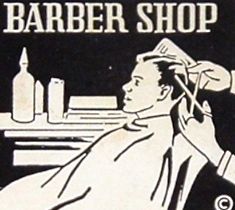
barber
shop
|
home
grooming |
| Shave
and a haircut: A brief history of modern barbering
In Barber Shop
History and Antiques, Christian R. Jones
reckons the golden age of barbering as stretching from
1880 to 1940. A. B. Moler opened his first barber
college in 1893. Hair tonics were previously made from
carefully guarded formulas and dispensed from ornate
decanters. Moler's students learned both how to make
tonics, shampoos, and other grooming aids, and how
to sell them in their shops. Trained in all aspects of
barbering, fresh out of the college they found work in
established shops.
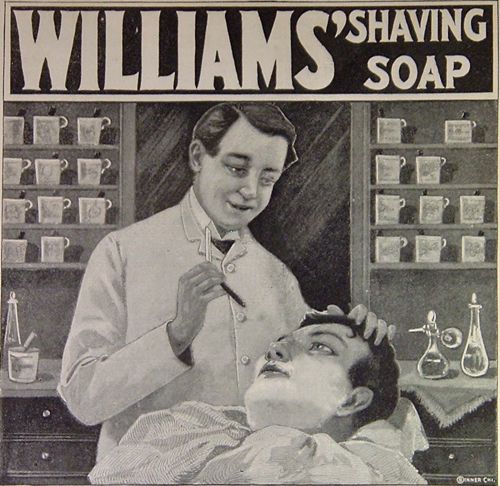
F.W. Fitch, who would become known as "the Shampoo
King", sold his Ideal Dandruff Remover Hair Tonic
through barber shops. Many other tonics of the time
consisted of up to 95% poisonous wood alchohol, which
Fitch was convinced was the cause of many scalp and hair
problems. In 1906, Congress passed the Pure Food and
Drug Act, outlawing wood alchohol, and Fitch's sales
skyrocketed. His tonic was used in conjunction with
Fitch's Ideal Shampoo Soap, which he later combined into
Fitch Dandruff Remover Shampoo.
Fitch and Moler worked to raise the barbering
profession. Railroads brought expansion and 15 chair
city shops became common. Improvements in sanitation,
plumbing, and electricity helped to create "gentlemen's
grooming and social institutions where amiable, polite
conversation was anticipated nearly as much as the
services rendered", as Christian Jones notes. You could
also have your top hat ironed at these lavish salons,
sometimes called shaving parlours, and they were awash
with various scents from tonics, shaving cream, after
shave, and cigar smoke.
In 1904, mass production began on King Camp Gillette's
safety razor, which would soon overtake straight razors,
and spell the end of the barber shop shave. The U.S.
government issued both straight and safety razors to
troops in World War I.
Tonic bottles were used during Prohibition to smuggle
bootlegged alchohol. Tonic manufacturers and barber
supply dealers had licenses to draw alchohol to make
tonic, but how much they could draw was based on use and
sales. Bootleggers would buy the alchohol from the
dealers. This clever ruse required refilling empty
bottles with fake tonic to be sold through the barber
shop. Fitch created bottles with shaker holes too small
to be refilled, although ads claimed the reason was to
"eliminate spilling and wasting".
After the crash of 1929, and throughout the Depression,
many men could scarcely afford even a haircut, and shops
declined in size, services offered, and decor. WWI,
WWII, and the Korean War, also greatly decreased the
number of customers. Sears and other retailers began
selling home haircut kits, with electric clippers, which
furthered the decline.
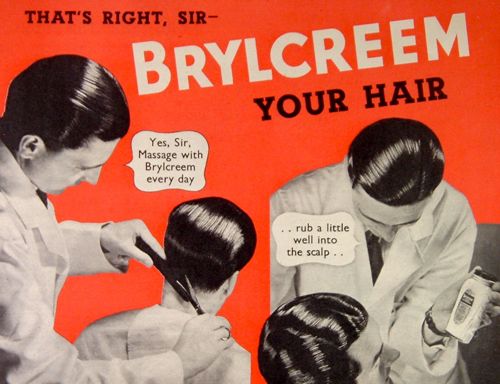
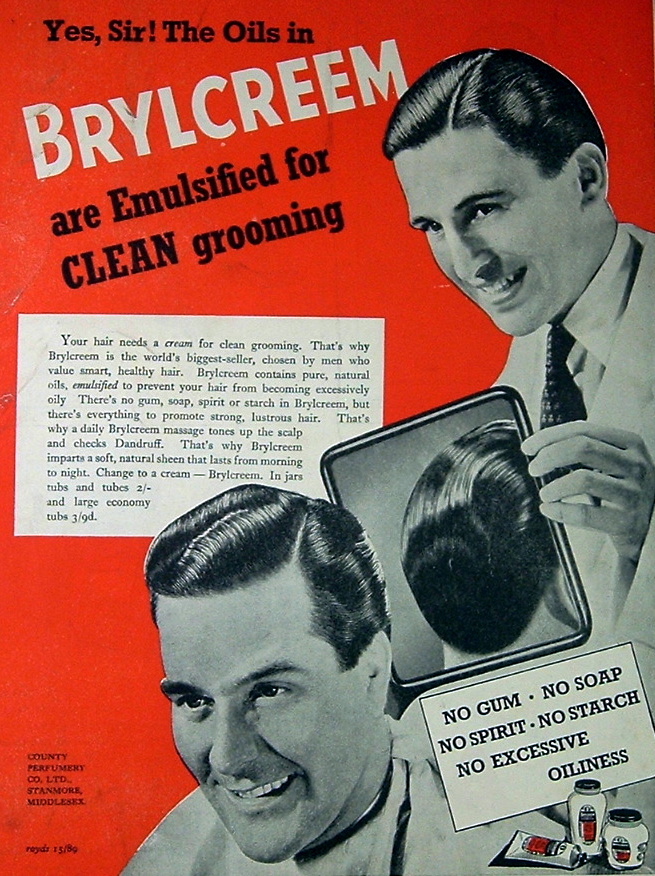
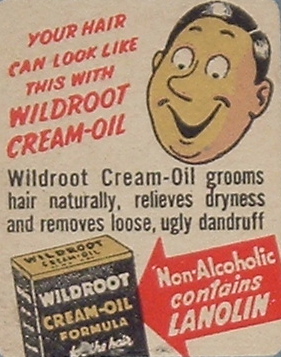
Brylcreem, invented in Britain, was issued to G.I.s, and
also became popular stateside. Available in stores, it
was also used and sold by barbers. In the U.K., it was a
verb, with adverts urging gents to "Brylcreem your
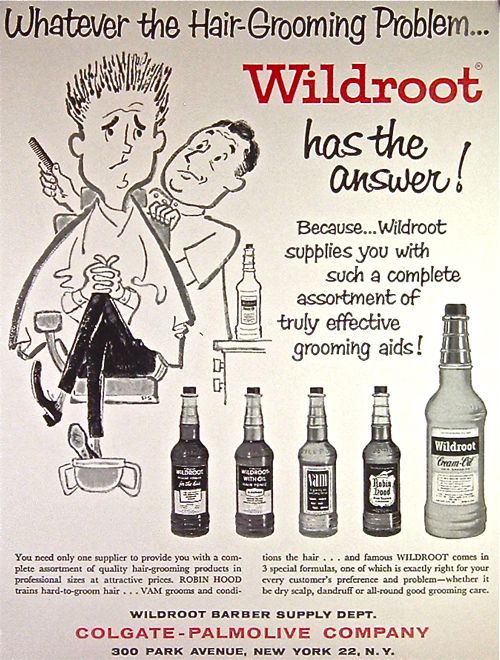
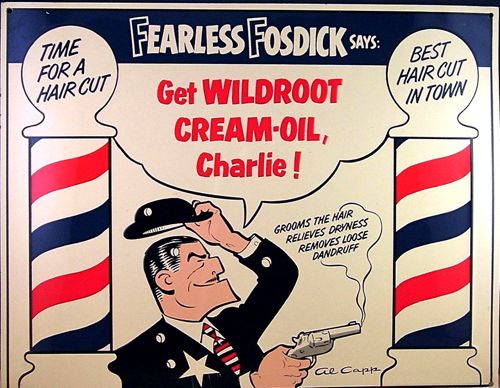
hair". Wildroot Cream Oil, invented in the states, went
head to head with Brylcreem (literally) in ads, stores,
and barber shops, as the epitome of good grooming. Both
became so popular that competing brands, such as Vitalis
and Vaseline, famous for their liquid tonics, also made
hair creams, or cream hair tonics, as they were usually
known.
 |
 |




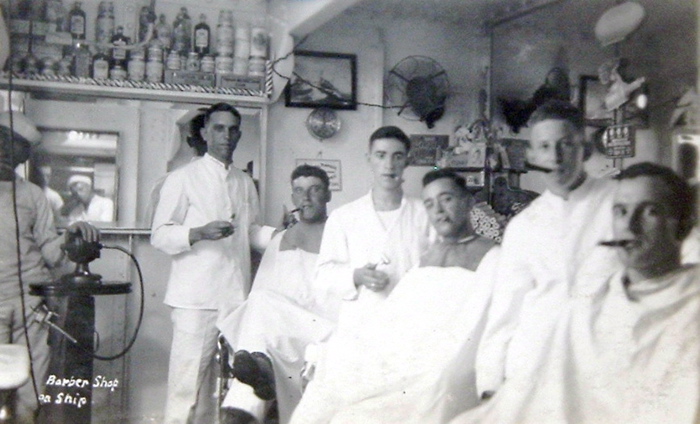
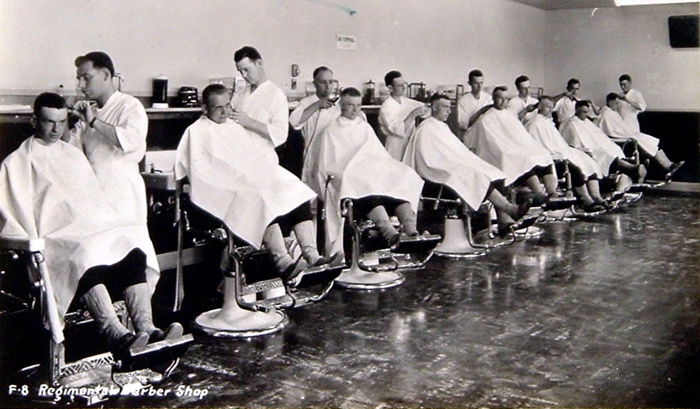
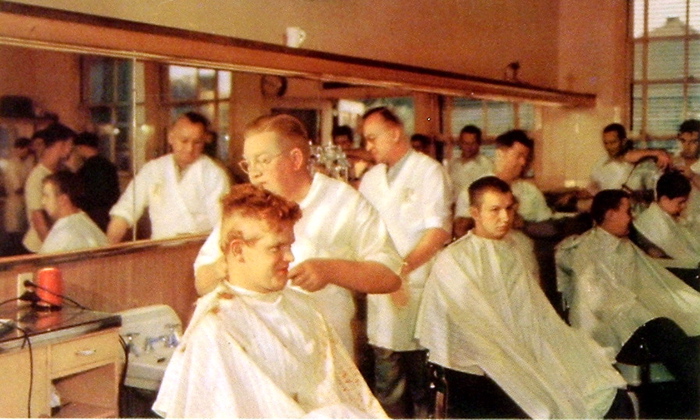
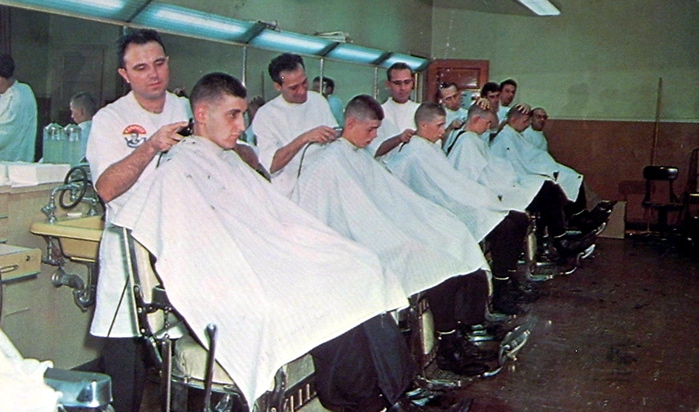
Above,
top to bottom: barber shop aboard ship; Regimental barber
shop; Navy Recruit Depot Barber Shop; Navy Exchange Barber
Shop.
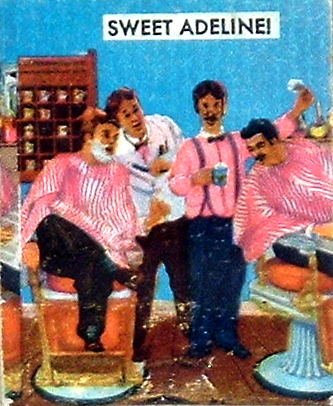
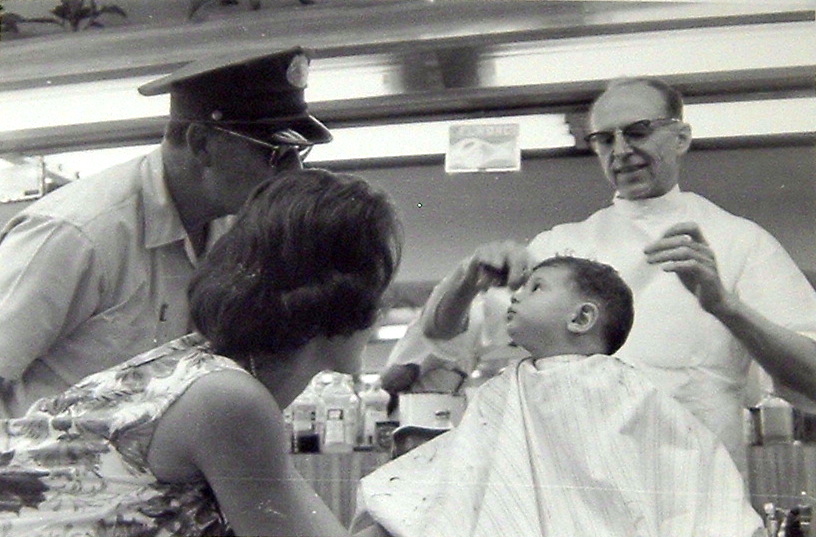
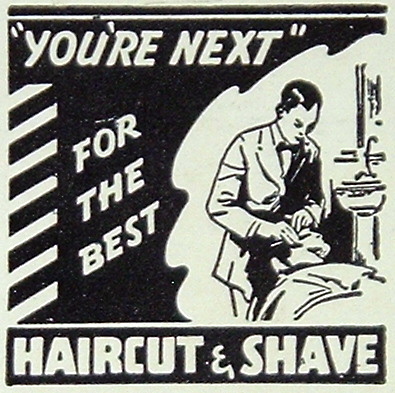
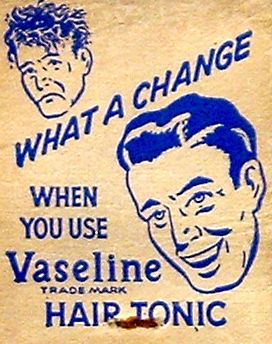
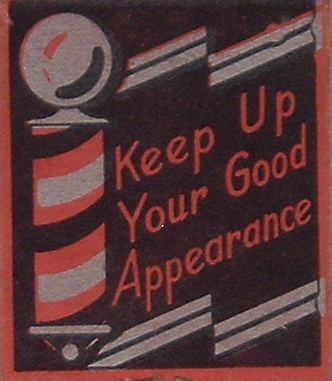
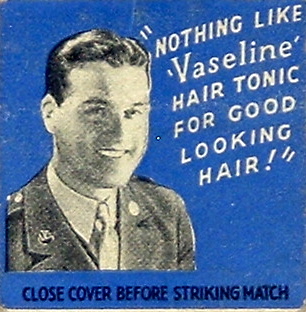
Right: top to bottom: 1963 "first haircut"; Krew Comb barber shop poster showing Latest Haircut Styles: "The Campus Leader", "The Executive", "The Continental", "The Sportsman", "Today", and "Yesterday". Below: matchbooks given out by barber shops. |
The
'Fifties Revival The
'40s are generally considered the end of the golden age of
the barber shop. With the decline of male customers during
the wars, shops became more functional and stripped down,
replacing the rich wood paneling with painted white walls,
removing the once lucrative cigar humidors, unable to
afford the additional staff for manicures and shoe
shines. Ornate carved backbars, hand blown tonic bottles,
upholstered wooden barber chairs, and other items from the
golden age are today avidly sought by collectors.
But
the '50s saw a renaissance of sorts in returning
servicemen who, used to a short military cut, both sought
out remaining shops and opened their own. During the Baby
Boom, they brought their sons to their favorite shops, who
in turn brought their sons, and the shop revived as a
masculine gathering place as G.I.s homed in on the red and
white pole.
Multi-chair
shops sprang up in the new shopping centers, gleaming
white and stainless steel. Many took on hunting or sports
themes, and installed the new invention of television so
patrons could watch the game. Used to military discipline,
the new clientele was clean-cut and well-groomed.
A
number of short haircuts made their debuts in the '50s,
among them the duck tail and flat top. Numerous variations
on the crew cut or brush cut appeared. Along with
Brylcreem to slick down the executive cut, there was crew
cut wax to stand up the short cuts. Not to mention
Wildroot, Vitalis, Vaseline, Lucky Tiger, Stephan's,
Sandahl's, Fitch, and Jeris, to name a few. Barbers
poured on bottles, squeezed out tubes, and scooped out
jars, since all patrons got the "wet look". Since most of
these products were sold through barber shops, it meant
lucrative trade for barbers. As one slogan often
seen in shops advised, "Buy your home needs from your
barber; he has the best!"
  |
|

|
Not
all
barbers were decorators, not all were salesmen. But in these
halcyon days, they didn't have to be. Shops featured bright,
appealing, graphic advertisements for the same products
used by, and sold by, the barbers of the shop. Barbers could
make a good living, and Barber College was often a career choice
for Varsity men. A three legged stool, it's said, is the
strongest, and barbering was firmly established by the triad of
the barber school, the barber supply house, whose reps, known as
"jobbers", visited shops to deliver supplies, and thirdly, the
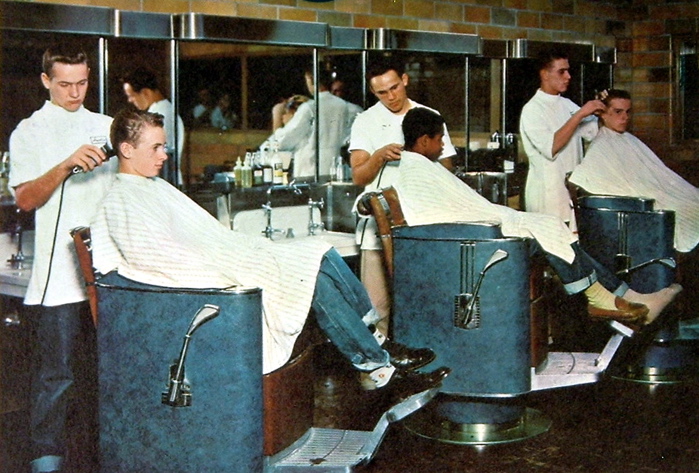
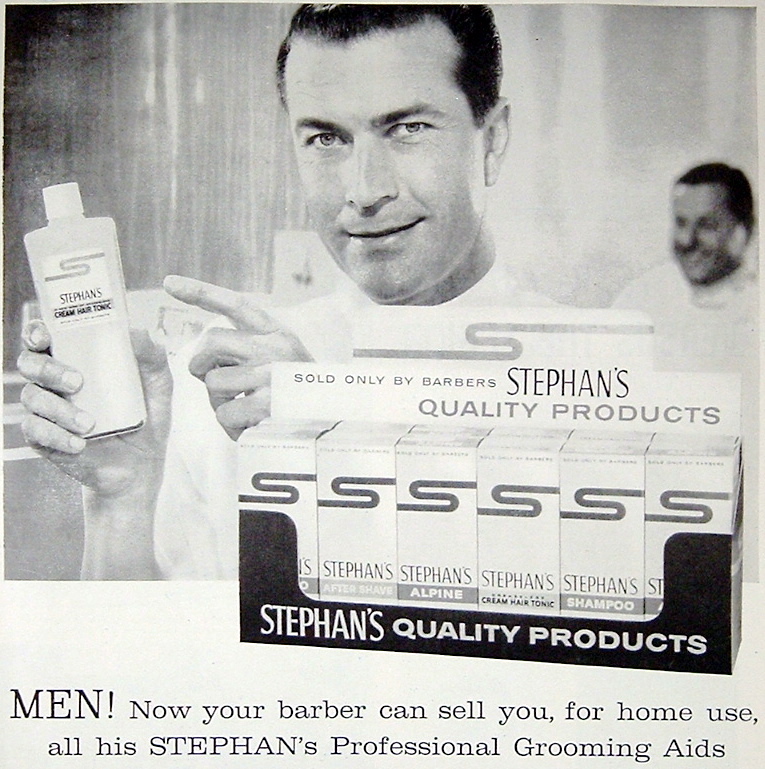
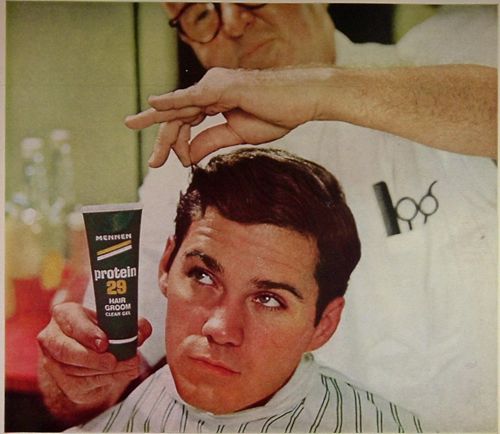
ever- present barber shops. Top left: Boys in the '50s practice barbering at Boys' Town. Top right: ad in life magazine announcing that barbers will be selling Stephan's shampoos and tonics for home use. Bottom left: '60s Mennen ad for Protein 29 hair groom, available as gel or cream. Bottom right: Andis clipper ad in a '60s barber magazine. |

Disclaimer:
barberz.com
is a site for enjoyment. Information is taken from
manufacturer’s instructions. It is not meant to substitute for
a doctor’s or practitioner’s advice. While every attempt has
been made to present factual information, neither barberz.com
nor its associates make any health claims or substantiate any
medical benefits for products on this site. Always read the
instructions for any product and consult a doctor before
starting any type of medical treatment or health plan,
exercise or massage program. barberz.com
and its associates assume no liabilty for any products or
information on this site. copyright 2004-- 2019. All rights
reserved.
|
| back |
next |